terça-feira, 5 de novembro de 2013

10 Things to Stop Doing if You Want to Lose Weight

1- Stop choosing the wrong diet.
How often have you chosen a diet because it worked for a friend? Perhaps you were inspired by a celebrity spokesperson? A diet might be perfect for someone else, but their needs, their lifestyle, and their food preferences could be completely different from yours.
Instead, ask yourself five important questions about your diet history, medical background, and sources of support. The answers will help you to identify your specific needs as a dieter and help you to choose the best weight loss plan for you.

2-Stop setting unrealistic goals.


Dieters are often highly motivated and full of excitement at the beginning of their weight loss program. It is often during this phase that they set unrealistic goals for weight loss. But unrealistic expectations can cause weight gain when lack of progress leads to lack of motivation.
Instead, take the time to sit down and set both short- and long-term goals. By setting up small, achievable steps on the way to your larger goal, you set yourself up for gradual success. Incremental steps will also help you to stay motivated through the entire weight loss process.

3-Stop using "lack of time" as an excuse.


One of the most common barriers to weight loss is the belief that you don't have enough time. One study found that 41% of women cited "lack of time" as the reason that they didn't eat better and 73% of women said they didn't exercise because they didn't have the time. The bottom line is that if you want to lose weight, you have to find a way to carve out time for healthy activity.
Instead of giving up, get out an old-fashioned paper calendar. Find windows of time that are not consumed by absolute necessities. Then schedule time for healthy food preparation and exercise. Pen in these items and schedule everything else around them. Don't be afraid to put other priorities on the back burner or ask for help (see item #4) so that you can take the time you need to make your health a top priority.

4-Stop isolating yourself.


In a recent interview with Biggest Loser runner-up Hanna Curlee, she said that the most important thing she learned during her successful weight loss experience was to ask for help. "I was ashamed to ask for help," she said. "I could have called someone and reached out for help, but I thought I didn't have anyone." She realized later that she had friends and family who were willing and able to help her through her weight loss journey.
Instead of isolating yourself, learn how to get diet support from family and friends. Take the time to identify your needs for yourself and then approach others. That way, you'll be clear about defining specific ways in which they can help.

5-Stop underestimating your food intake.


Do you really count all of your calories? Remember that even tiny 25-calorie nibbles here and there throughout the day can add up. Snacks count, food from your dining partner's plate counts, and calories consumed during food preparation count.
Instead of relying on guesswork, use a food tracker like the one at CalorieCount.com. The website provides a great tool, and there is even a mobile app that will help you track every food that you consume. Make your entries more accurate by purchasing an inexpensive food scale. The tool will allow you to report the exact size of each portion you consume. Compare prices to find a scale that fits in your budget.

6-Stop believing that "healthy" foods will cause weight loss.


Several studies have shown that people are more likely to overeat foods that they perceive to be healthy. One study at the University of Michigan found that when a food was labeled "organic," dieters ate more of it. There may be health benefits to the food you are eating, but if you eat too much of it, it will cause weight gain.
Instead of reading product claims on packages, read nutritional facts labels. Start by assessing the serving size, then see how many calories and how much fat is in the product. You may find that your "healthy" snack is causing unhealthy weight gain.

7-Stop sitting all day.


Non-exercise activity thermogenesis, or NEAT, is a fancy term for all of the non-exercise movement that you do every day. It can account for up to 15-30% of your total calorie burn. If you spend your day sitting at a desk or your evenings lying on the couch, the calories you burn from NEAT will be minimal.
Instead of being sedentary, increase your daily activity. If you have a desk job, get up every hour and walk to the restroom on a different floor, refill your water, run an errand on foot, or climb the stairs in your office building. If you like watching television at night, fold laundry or dust furniture instead of just lying on the couch.

8-Stop overestimating your exercise activity.


Many people who want to lose weight join a gym. But you actually have to go to the health club to burn calories. And your workout time is only the time you spend exercising. It should not include the time you spend in the locker room, parking your car, and chatting with friends.
Instead of using ballpark figures, invest in a heart rate monitor. There are quite a few models on the market, so compare prices to find one that fits your budget. A heart rate monitor not only lets you know how hard you are working, but most models will measure your "time in range" to let you know exactly how many minutes you can count as exercise.

9-Stop compensating for exercise by eating more.


It is normal for your appetite to increase when you begin to exercise. A common weight loss mistake is to indulge in extra snacks and treats as a reward for the workout. But eating those treats can cause weight gain.
Instead of overeating after your workout, plan to eat a healthy, low-calorie snack right after you exercise. Combine a lean protein with a carbohydrate to satisfy your hunger and replace nutrients lost during the workout. A glass of skim chocolate milk works well and tastes decadent enough to feel like a treat.

10-Stop expecting major results from minimal change.

It's easy to believe the advertising claims made by numerous weight loss pills, supplements, and fad diets. Too many of them claim that major weight loss is easy. But weight loss is hard. Don't let the difficulty of the process deter your best efforts.
Instead of getting frustrated, focus on small accomplishments as you lose weight. At each stage of the weight loss process, find an accomplishment to be proud of. Then focus on what you have gained. For example, if the scale isn't giving you the weight loss results that you want, then celebrate the fact that you ate a well-balanced diet during the day and remind yourself about the health benefits you gained from eating well. Your exercise plan may not be resulting in weight loss yet, but it may help you sleep better at night and feel better during the day. Look for and acknowledge the little perks along the way.

[​IMG] 

segunda-feira, 4 de novembro de 2013

How to Choose Clothing for Commuting in Winter

http://www.youtube.com/v/EWSF3hAgcBo?autohide=1&version=3&showinfo=1&autohide=1&autoplay=1&attribution_tag=jAiABd8AvFslr8zKZvVjog&feature=share

10 dicas para pedalar na chuva

Nem todo mundo consegue sair com a bicicleta quando está chovendo. O desconforto parece tão grande que muita gente acaba deixando a bicicleta em casa – ainda que isso implique em perder um tempão a mais no congestionamento ou aguentar o aperto no transporte público, situações que pioram em dias assim. Pensando nisso, o Vá de Bike reuniu boas dicas para te ajudar a manter a liberdade até debaixo d’água.

1Perca o medo da água

Quem vive na cidade aprende desde cedo a se esconder da água que cai do céu, seja debaixo de um guarda-chuva, dentro de uma casa ou dentro de um carro. Aliás, o carro é usado muitas vezes como um guarda-chuva caro e espaçoso: fechou o tempo e pronto, lá vamos nós dirigindo até a esquina de baixo…
O problema não é
tomar chuva,
mas ficar com
roupa molhada
no corpo depois
O primeiro passo para conseguir encarar a chuva é compreender que ela é parte da vida. É fundamental para a produção de alimentos, para a sobrevivência de animais e plantas, para regular a temperatura do ar e até para limpar um pouco a poluição de nossas cidades. Aceite-a como um presente da natureza, como parte essencial do que somos e de quanto caminhamos como espécie para chegar aqui. Chuva é vida.
Mas calma, você não precisa criar uma paixão repentina por banhos de chuva! :) Também não precisa passar o dia trabalhando com a roupa molhada, nem precisa pegar um resfriado. E é aí que entram as nossas dicas. Claro que se você perceber que será uma chuva rápida, vale a pena esperar 10 ou 15 minutos debaixo de alguma cobertura, mas nem sempre isso é possível ou previsível. Uma hora você vai ter que encarar uns pingos.
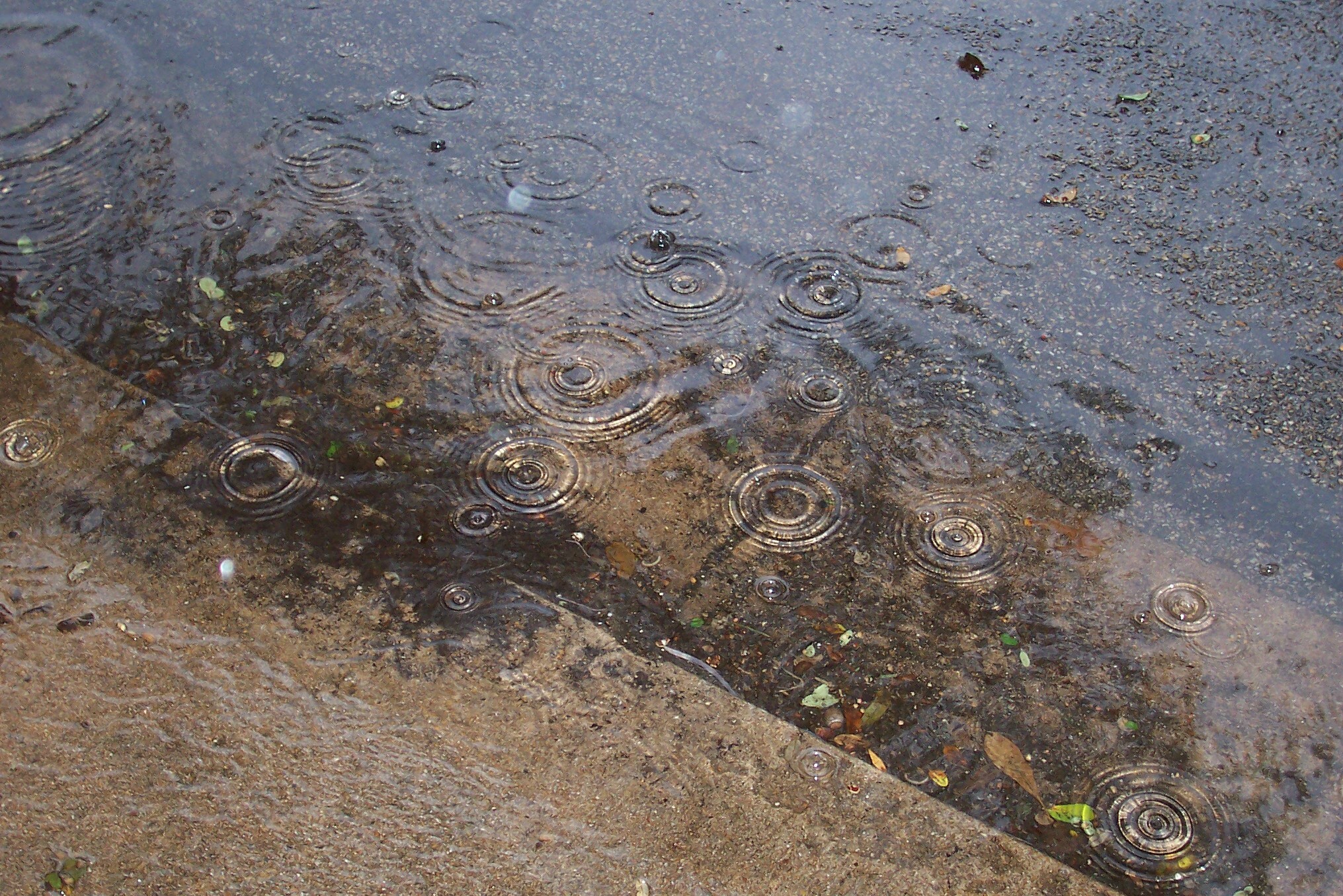
2Tenha uma boa capa

Leia também
Faça você mesmo sua capa de chuva do tipo poncho
Ao pensar em usar a bicicleta na chuva, muita gente pensa logo nas roupas que os motociclistas usam. Entretanto, apesar de eficientes para impedir a entrada da água e do frio, são bastante inadequadas para o uso com bicicleta, pois bloqueiam a saída do calor do corpo e da transpiração. Pra piorar, limitam os movimentos.
A melhor solução é usar uma capa de chuva mesmo, de preferência do tipo poncho, que cobrirá todo seu tronco, cabeça e boa parte das pernas. Existem capas específicas para o uso com bicicleta, com tecido leve e aberturas estratégicas para permitir que o calor do corpo escape e a transpiração evapore.
A solução mais barata, e nem por isso menos eficiente, são aquelas capas de chuva transparentes e descartáveis que são vendidas até em bancas de jornal. Dobrando com cuidado depois de seca, você consegue usar mais de uma vez. Outra opção é você mesmo fazer a sua capa – veja aqui.

3Instale paralamas

Paralamas são importantíssimos. A chuva que cai do céu é limpa, mas a água que o pneu tira do chão e joga para cima é bastante suja, seja por terra e poeira ou por causa do óleo que cai do motor dos carros. Sem paralamas, essa água vai direto no seu rosto e nas suas costas.
Quanto mais “envolvente” for o paralama, melhor. Mas como as bicicletas nacionais raramente têm suporte adequado para a instalação, é preciso recorrer a modelos que prendam no canote e embaixo do garfo. Se você tem bagageiro, é altamente recomendável colocar um paralama por baixo dele, senão é a sua bagagem que vai conter a sujeira do asfalto…
Foto: Earl Wilkerson (cc)

4 Ensaque tudo dentro da bolsa ou mochila

Coloque tudo dentro de sacos plásticos, sempre. Depois que uma chuva forte te pegar de surpresa, você vai passar a guardar tudo dentro de sacos plásticos, mesmo que esteja fazendo o maior sol. Nada mais frustrante que chegar ao destino esperando vestir a roupa seca da mochila e ela estar toda molhada.
Não corra o risco de estragar seu celular, mp3, ipod e etc. com a água da chuva: guarde os eletrônicos numa sacola plástica e coloque dentro da mochila ou alforge.
Se você tem um bagageiro, coloque a mochila toda dentro de uma sacola plástica grande antes de prendê-la.

5Mantenha os pés secos

Uma alternativa barata e bastante eficiente (ainda que tenha um visual nada elegante) é envolver os pés com sacolinhas plásticas, daquelas de supermercado. Mas atenção: é importante manter as meias dentro da proteção da sacola também, para que a água da chuva não infiltre por elas! É recomendável o uso de duas sacolas em cada pé, uma por cima da outra. Veja o passo a passo com fotos feito pelo nosso amigo Wadilson.
Há um acessório vendido em outros países com o nome de overshoes, uma cobertura impermeável para cobrir o calçado. Funciona muito bem, mas é quase impossível de se encontrar no Brasil. Há também a opção de usar um calçado que você não se importe em molhar, levando outro protegido na mochila, para trocar quando chegar ao destino.
Também é possível pedalar com um chinelo, papete ou sandália. Mas tome cuidado para que o pé não escorregue do pedal durante a pedalada, ou ao apoiá-lo no chão quando você parar a bicicleta.
Se ainda assim seu sapato ou tênis molhar no caminho, forre-o com papel toalha quando chegar ao destino e calce com o pé sobre essa camada. Troque o papel absorvente a cada meia hora no máximo e logo estará seco, sem você precisar ficar descalço.

6Use luvas

Luvas já são recomendáveis em situações normais, por protegerem as mãos em caso de queda e por evitar irritação na pele, que fica em atrito constante com a manopla. Em dias de chuva, tornam-se ainda mais úteis, para que suas mãos não escorreguem no guidão.
Quanto ao tipo de luva, depende se está frio ou calor: no frio, é melhor usar as de dedo fechado, para que a mão não enrijeça. O importante é que seja um modelo em que a mão não escorregue na manopla, por isso é bom comprar luvas próprias para ciclismo.

7Controle a transpiração

Debaixo da capa de chuva, a transpiração vai evaporar bem menos e tornar-se mais visível. Para não ficar mais molhado por dentro da capa do que por fora, pedale mais devagar, respire com calma e faça mais paradas. E não esqueça de tomar água, que se estiver gelada ajudará a resfriar seu “motor”.

8Leve uma roupa extra

Por mais que você se proteja, pode ser que sua roupa molhe um pouco. Principalmente a calça, que pode até sujar com a água da rua. Por isso é importante levar uma muda de roupa, mesmo que apenas para uma eventualidade.
Se você tem uma gaveta no escritório, deixe nela calça, camiseta ou camisa e um par de meias. Senão, leve tudo numa sacola, dentro da mochila.
Uma opção é usar uma roupa mais leve para pedalar, que possa molhar e até mesmo sujar, e levar a roupa limpa na mochila ou alforge, protegida dentro de um saco plástico. Se você colocar as roupas dentro de uma pasta de plástico, daquelas mais altas, não irão amassar.

9Troque-se ao chegar

Quando chegar ao destino, é importante trocar logo todas as peças de roupa que ficaram molhadas (ou improvisar um jeito de secá-las, usando por exemplo o papel toalha do banheiro).
Vale lembrar que não é tomar chuva que pode te deixar doente: é ficar com o corpo gelado por causa da roupa molhada, depois que passar o calor da pedalada. Principalmente se você estiver em um ambiente com ar condicionado.
Cuidado para não pisar nas poças ao parar a bicicleta. Além de se molhar, você pode torcer o pé em algum buraco escondido pela água. Foto: Featherlite (cc)
Cuidado para não pisar nas poças ao parar a bicicleta. Além de se molhar, você pode torcer o pé em algum buraco escondido pela água.
Foto: Featherlite (cc)

10Fique atento nas ruas

Tome cuidado para não escorregar, principalmente logo que começa a chover. O óleo que cai dos carros se mistura com a água e o chão fica escorregadio. Atenção extra nas descidas, não deixe a bicicleta pegar muita velocidade para não precisar frear bruscamente.
As faixas de pedestres e outras sinalizações de solo também ficam escorregadias na chuva. Evite frear em cima delas. Grelhas e tampas de bueiro também podem escorregar. E aquelas chapas lisas de metal, usadas para cobrir reformas e buracos no asfalto, viram um sabão quando chove, muito cuidado!
Se não tiver como desviar de algum desses pontos de risco, mantenha a bicicleta “imóvel” enquanto estiver passando por cima, seguindo em linha reta sem virar o guidão nem mudar o centro de gravidade. E em hipótese nenhuma freie, deixe para depois que os pneus voltarem ao asfalto.
Evite passar por locais onde há acumulo de água que não lhe permita ver o que há no asfalto. Pode haver um buraco ou uma tampa de bueiro aberta!
Não se arrisque a pedalar em áreas alagadas, você pode se machucar e contrair doenças.
Durante chuvas fortes, a visibilidade dos motoristas cai muito e você vai enxergar muito melhor que eles. Parta sempre do princípio de que o motorista não o viu e pode entrar na sua frente sem aviso. Acenda as luzes da bicicleta, mesmo de dia, e evite avenidas movimentadas.

A primeira vez

A primeira chuva a gente nunca esquece, principalmente quando ela nos pega de surpresa. E a primeira tempestade vencida é uma libertação. Você percebe que as condições do tempo não mais lhe impedem de escolher a bicicleta, mesmo em dias improváveis.
Pedalar na chuva tem gosto de molecagem que a mãe não deixa fazer, de transgressão lúdica de uma regra boba dos adultos, de ser dono do próprio nariz e fazer o que bem entende. É a última barreira vencida.
A chuva é a fronteira final do ciclista urbano.

15 Tips to Become a Sponsored Triathlete

As an athlete, you're focused on how to better your performance, what you should be eating, and when the next race is going to be.
Have you ever taken a moment to think about what happens once you reach the elite level? How do you build a brand for yourself? How do you keep sponsors coming? It's an important aspect of being an elite triathlete, and yet it's rarely discussed.

GAME PLAN

It's expensive to be a pro triathlete. Before you launch your pro triathlete career, make a plan. What equipment do you need and how much is it going to cost? How much will your travel arrangements cost? Make a budget of everything and create a plan to help finance your racing career.

CREATE A FOLLOWING

Map out how you will brand your name to gain sponsorship. Brands have loyal fans and you'll want to begin building a public presence to attract your own supporters. Use social media, start a blog or build a website that documents your successes and training.
Potential sponsors want to see that you have some influence within the racing community. Building a public presence online will show them how many people will see their name. They're interested in numbers such as Twitter followers or Facebook friends.
Be active with your fans, listen to them, interact with them and people will follow you. A top five finish might get you noticed, but you'll generate a fan base by how you race. How you act before, during and after the race can be just as important as your finishing time.

BE YOUR OWN AGENT

You have to book your own travel, make race arrangements, repair equipment and deal with media and sponsors. This requires a degree of organization.
When you're focused on training, it can be easy to forget to book travel arrangements or return an email to a sponsor. Make sure to set aside time to look up flights, make hotel reservations, research bike transportation, visit race expos, work on brand promotion, and update your blog and social media pages.
Carve out time each day to write to followers about your training that day. A series of short write-ups or posts on Facebook, a blog or website, documenting your progress will generate interest and excitement in your next race.

INTERACT WITH PEOPLE

You have a product to sell when you're out and about. Make sure you plan time before and after any race to promote your products. 

TRACK YOURSELF

Keep track of any photo shoots and interviews you have scheduled. If you're scheduled for a photo shoot in a cycling magazine, you'll want to notify your bike sponsor. Determine if there is an opportunity to promote one of your sponsor's product. Remember, you're a brand ambassador.

BE SELECTIVE

When you're starting out, getting a sponsor is very exciting. Make sure it's a brand you can be loyal to. If there's a company conducts animal testing and you don't support that activity, don't accept their sponsorship.
If you don't like the product, how can you talk positively about it? 

BRAND BUILDING CHECKLIST

Keep these 10 things in mind to build your business as an elite triathlete:
  • Build and manage your website.
  • Create a logo for yourself.
  • Create a Twitter account and tweet daily.
  • Create a Facebook account and update your status.
  • Stand for something. Pick a charity to raise money for.
  • Create a good image of yourself.
  • Get involved with your community.
  • Wear logos when at public events.
  • Make public appearances at local events. Don't be afraid to speak in public about your cause.
  • Brand loyalty. Keep good values when selecting brands.

domingo, 3 de novembro de 2013

PEOPLE ARE AWESOME 2013 (THE BEST)

http://www.youtube.com/v/tUB4CCF4v4M?autohide=1&version=3&autoplay=1&attribution_tag=4806abUQaKZTBpoqlqFb3g&showinfo=1&feature=share&autohide=1

Pensar e Falar Angola

How To Be A Mountain Biker

http://www.youtube.com/v/WPVRU7jSYkQ?version=3&autohide=1&autohide=1&feature=share&showinfo=1&autoplay=1&attribution_tag=x8VOACcb8sVvW7RzoFlpvg

Pensar e Falar Angola

6 Speed Workouts to Run a Faster 5K

A 5K is the perfect distance for both beginning runners and veterans. New runners can pride themselves on finishing a 5K race, and more advanced runners can use the distance to set a new PR.
Since 3.1 miles is a relatively short distance, an advanced runner can focus on more specific preparation in order to improve speed. And if your training is sound, you can run strong from the start and cross the finish line with a negative split.
But how do you actually train for a 5K? These essential workouts will help you run strong at your next race and set a new personal best.

WORKOUTS FALL ON A SPECTRUM

Race workouts fall on a spectrum that goes from general to specific. Specific workouts are usually more advanced. If you're a new runner, you should build your fitness foundation first before you incorporate specific workouts.
Let's take a look at some examples. If you're training for a marathon, running 15 miles at your goal marathon pace is very specific to the demands of the race. Just like three 1-mile repetitions at your goal 5K pace is specific to the 5K race distance.
You can take this principle and apply it to any race. Running 2 x 5K at your goal 10K pace is very specific to a 10K race.
An easy 3-mile run would be considered a general workout. This type of workout won't help you build your race-specific fitness like a challenging training run that's similar to the race itself.
Now that we understand the difference between general and specific workouts, let's see how a runner can plan a progression to train for a 5K.

For early workouts, use unstructured fartleks and tempo runs that get slightly faster and longer as you progress.
Here are a few examples:
Note: For each workout, make sure to warm up and cooldown with an easy jog.
  • 15 minute tempo run
  • 5 x two minutes at your 10K race pace (jog for two minutes to recover between intervals)
  • 8 x 30 seconds at 20 seconds per mile faster than your goal 5K pace
As you get closer to your race, the workouts gradually become more difficult and specific to the 5K.
  • 5 x two minutes at goal 5K pace (jog for 90 seconds to recover between intervals)
  • 6 x 800 meters on the track at goal 5K pace (jog 400 meters for recovery)
  • 3 x 1-mile run on the track at goal 5K pace (jog one minute to recover between sets)
These workouts get progressively harder; the length of time you spend running at your goal 5K pace increases while recovery time decreases. Soon, your workouts will be almost as hard as the race itself.
Remember that 5K-specific workouts are much more challenging than general workouts used to build overall fitness. If you don't have at least six months of running experience under your belt, you should continue with general workouts. They're still great to get in shape and improve as a runner.
As you advance as a runner, completing specific workouts will give you the confidence you need to practice your race pace and be a stronger, faster distance runner.

sexta-feira, 1 de novembro de 2013

7 Diet Habits You Should Drop Now

We get it: With so much contradictory advice floating around about the best diets for weight loss, it's no wonder many of us end up confused about what we should eat for optimal well-being and a healthy weight.
Read on for seven things you might think are helping you shed pounds, but could actually be sabotaging your weight loss and hurting your health. If you can drop these harmful habits, you might just become a healthy eater for life.
7. Skipping breakfast. About 10 percent of the U.S. population, or 31 million Americans, skip breakfast, according to a 2011 survey. But according to a recent study from Tel Aviv university, breakfast is indeed the most important meal of the day -- especially for people who want to lose weight. The researchers put 93 obese women into two different groups and instructed them to eat a nutritionally similar diet of 1,400 calories a day. The only difference was that one group made breakfast their biggest meal (at 700 calories) and the second group made dinner their biggest meal (700 calories).
After 12 weeks, the group that had made breakfast their biggest meal lost an average of 18 pounds and three inches from their waist, while the big dinner group only lost seven pounds and 1.4 inches from their waists. Additionally, while both groups lost weight, those in the big dinner group actually had an increase in triglyceride levels, which is linked to heart disease, diabetes, hypertension and high cholesterol, reports Medical News Today.
6. Going on a juice cleanse. Proponents of the juice cleanse claim that going on an all-liquid diet of pressed vegetables, fruits and a small amount of nut milk for days or even weeks will clear your body of toxins, help you drop weight and make your skin glow.
Don't believe the hype, warns the Mayo Clinic. Despite the appearance of hip juice bars in your city and the popularity of juice cleanses among some celebrities, long-term juice cleanses are one of the worst things you can do to your body if you want to shed pounds for good.
The reason? While long-term cleanses will make you lose weight, it's mostly water weight that will boomerang back once you resume your normal eating habits. And it could trigger other health problems, as well, including an out-of-whack metabolism and irritability.
If you genuinely like the feel and taste of liquified vegetables and fruits, then juice away for a meal here or a snack there. But don't juice exclusively for long periods of time, and remember that juicing strips many foods of their fiber and nutrient-rich skins while concentrating the sugar in fruit, warns Glenn D. Braunstein, M.D. of Cedars-Sinai Medical Center.
green juice
5. Filling up on diet soda drinks. It makes sense. Fizzy drinks make you feel full, which could help quell the need to snack. But if you're turning to diet soda drinks for your fix, then you could actually be sabotaging your weight loss.
Drinking diet soda and other artificially sweetened beverages could be linked to weight gain, Type 2 diabetes, heart disease, stroke and high blood pressure, according to a2013 analysis of recent studies on artificial sweeteners by Purdue University.
The reason? Your body might be confused by artificial sweeteners, according to lead analyst Susan E. Swithers, Ph.D., a Purdue professor of psychological sciences and a behavioral neuroscientist. Swithers' research suggests that your body's natural ability to manage calories based on tasting sweet things is being seriously toyed with, thanks to the artificial sweeteners in diet sodas. Instead of diet drinks, try plain sparkling water for that fizzy full feeling.
4. Completely cutting out entire food groups. Gluten. Carbs. Sugar. Meat. There is no magic bullet to weight loss, but for some people, elimination diets seem like a quick and easy way to feel in control of their bodies. Unfortunately, for those at risk for disordered eating, some elimination diets can actually just be a mask for eating disorders like anorexia and orthorexia, according to Yahoo! Shine.
The Mayo Clinic defines orthorexia nervosa as an obsession with "eating foods that make them feel pure and healthy," by avoiding things like artificial additives, pesticides, genetic modification, and unhealthy amounts of fat, sugar and salt.
But wait a second! Aren't all those ingredients good things to avoid? Yes -- but some people with the orthorexia could become so obsessed that they eventually "isolate themselves and often become intolerant of other people's views about food and health." Even worse, they could be missing out on key nutrients, especially if they fling themselves into gluten-free or vegan diets by focusing on the foods they can't eat, instead of doing research on the nutritious foods they can eat.
Of course, people who have diagnosed celiac disease must avoid gluten because itdamages the small intestine and prevents the body from absorbing nutrients. When people with celiac disease eat gluten, they can suffer from chronic diarrhea, vomiting, constipation and weight loss, according to the National Institutes of Health. But be warned: just because a food is labeled "gluten free," doesn't mean it's healthy for you (check out MensHealth.com for some gluten-free foods loaded with fat and sugar).
gluten free
3. Opting for low-fat versions. Intuitively, it makes sense: If you want to get rid of body fat, stop eating fat. But research shows that the fat you eat isn't really linked to weight gain and disease, according to the Harvard School of Public Health. Instead, it's the total amount of calories eaten, as well as "bad" fats like trans and saturated fats found in meat and processed foods, that seem to be linked to health problems. HSPH notes that people who go on low-fat diets often end up cutting out the good fats too, like monounsaturated and polyunsaturated fats found in olive oil and fatty fish.
Not only is fat good for you in moderation, but labels like "low-fat" and "nonfat" actually trick people into eating more, according to a study conducted by the Cornell University Food and Brand Lab. Researchers found that people who saw snack foods with a "low fat" label ate up to 50 percent more than those who ate from bags without the label. Eaters also underestimated the calorie content of "low–fat" M&Ms and granola by 48 percent and 50 percent, respectively -- especially overweight people. Instead of assuming that low-fat or nonfat foods are automatically better for you, read the nutritional labels first. You might just find that low-fat or nonfat versions actually have more sugar or calories than the normal-fat foods.
2. Going hungry. For people who want to lose weight fast, dropping too many calories could actually be an exercise in futility.
A meta-analysis of 31 long-term diets that averaged 1,200 calories a day found that while people lost weight, the vast majority regained it all back within four or five years, reports RealSimple.com. A better strategy would be to estimate the total amount of calories you use in a day, and then shave a small amount off that number.
"If you want to lose weight and keep it off forever, you need a modest calorie restriction that you simply continue and never stop," nutritionist Christopher Gardner told RealSimple.com. For example, if you figure out you need about 2,500 calories a day (using this formula), simply cutting out 250 calories a day could result in more successful, permanent weight loss over the course of a year than if you had plummeted down to 1,200 calories a day and could only stand to deprive yourself for, say, four months.
padlock on fridge
1. Thinking about it as a "diet" in the first place. This is the medical truth some weight loss professionals are scared to admit: The vast majority of people who lose weight won't be able to keep it off for good.
But for people who prioritize lifestyle changes over diet, there is hope when it comes to longterm weight loss, according to obesity expert Sherry Pagoto, Ph.D. of the University of Massachusetts Medical School. Pagoto recently published an editorial calling for an end to the diet wars in the Journal of the American Medical Association, pointing out that no diet is better or worse at helping people shed pounds.
"The 'diet' used within a lifestyle intervention can be low-fat, low-carb, etc. It doesn't matter," Pagoto told LiveScience. "Adherence is key, and the way to destroy adherence is forcing foods on someone they do not like, do not know how to prepare, or can't afford."
The faster you understand this, the better your chances are of making small, realistic and sustainable changes that you can carry on for the rest your life, as opposed to adopting dramatic, short-term diets that can ultimately result in an unhealthy cycle of losing and gaining weight.
RELATED ON HUFFPOST:
What Nutritionists Eat For Breakfast
1 of 11

quarta-feira, 30 de outubro de 2013

Phonebloks - The next step

http://www.youtube.com/v/BaPf4ZIbDVM?autohide=1&version=3&autohide=1&autoplay=1&attribution_tag=LSyDmjS0oz_qZaOoebZ1NQ&showinfo=1&feature=share

terça-feira, 22 de outubro de 2013

5 TIPS TO STAY MOTIVATED TO EXERCISE

This winter, I need to train hard and smart but most of all, I need to stay motivated. As winter approaches it’s vital we have bags of motivation in store for the coming months. Without a clear vision of what we want to achieve and why, we may struggle to find the how.
When the sound of the alarm breaks your sleep on those dark, cold mornings – you need your goals to be the first thing to pop into your head. Your vision needs to get you moving before the excuses have time to catch up. Here are a few tips to share with you:

1. BE INSPIRED BY OTHERS

Who inspires you? Let yourself be inspired by others, watch what they do, how they do it and learn from them. There is only thing that differentiates you from anyone who you aspire to be or anything you aspire to achieve. It’s the simple fact that someone else made it happen. People the world over have proven time and time again that anything is possible. You have to be prepared to take risks, to make sacrifices and to work hard, but if you are, you can make anything happen. Be inspired by others and then shoot for the moon yourself.

2. HAVE A TRAINING PARTNER

Find someone working towards similar goals to share your journey with. Your training is physically and mentally demanding. You’ve got a tough job balancing it with your work, home and social life. Sharing your goals and experiences with positive people who believe in you and what you want to achieve is important. Sharing it with people who want to achieve similar things fosters a competitive, supportive environment and helps you achieve more. It also makes it more fun! Even if you live in the sticks, use twitter to see what other people are up to and connect with them. I’ve made some brilliant connections through Twitter that have now become friends and training partners.

3. IT COMES FROM THE HEART

The heart is the source for all motivation. There are many techniques for developing short and long-term motivation but as much as we can train the body, it comes from the heart. It’s by believing passionately in your goals and why they are important to you that you will succeed. This isn’t something that can be trained or learned, you’ve either got the motivation, and want it badly enough to overcome everything that stands in your way, or you don’t.

4. GET THROUGH THE GRIND

Training and especially winter training is about getting through The Grind. You know that stage where it stops being fun anymore? Where you are tired, bored and your sessions become a chore? That is when you have hit The Grind. Stay motivated and push through this phase, as it is here you make big leaps in progress, train your mind to endure the boredom and learn to dig deep. When I look back on my challenges, I remember how fun and adventurous it feels to cycle 200+ miles in 24 hours. I also remember the repetition, boredom and pain. Mile after mile of sitting in the saddle, enduring the wind and rain and digging deep. Get through The Grind, you’ll thank yourself later.

5. SONGS, MOVIE CLIPS, QUOTES

Rather embarrassingly, on the morning of my wedding I was getting dressed in a room full of photographers, makeup artists and bridesmaids. My cousin picked up my Ipod, found the playlist entitled ‘Cycling to Paris’ and set it to play. Oh dear. The first song to play was Simply The Best, Tina Turner. Everyone laughed and asked if this was the kind of rubbish I listen to whilst cycling to Paris. I explained that they needed to be patient as more classy tracks were on the list, such as? Don’t Stop Believing, Journey, and It’s My Life, Bon Jovi. Hmmm… Ok, maybe not classy but at 4am in the morning having cycled 80 miles through the night, slept for 1 hour on the ferry and with 120 miles to go before stopping, I need all the motivation I can get.
My point is, songs, quotes, films, youtube clips are motivating and they work, use them. A few favourite videos of mine are How Bad Do You Want It? and Rise and Shine. Check them out and remember...

"DON'T ASK WHAT THE WORLD NEEDS. ASK WHAT MAKES YOU COME ALIVE AND GO DO IT. BECAUSE WHAT THE WORLD NEEDS IS MORE PEOPLE WHO HAVE COME ALIVE."

- Howard Thurman